Duo Heart Font: Friendly, Consistent Branding for Small Businesses
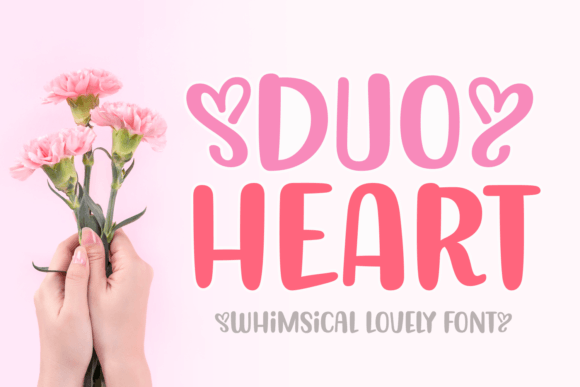
As a small business owner who designs my own labels, social posts, and packaging, I’ve learned that the right font isn’t just decoration—it’s part of how customers feel about my brand before they even read a word. That’s why I reached for Duo Heart when refreshing my café’s seasonal menu, handmade soap labels, and Instagram story templates. It’s a display font with soft curves, gentle rhythm, and a quietly confident charm—never cutesy, never cold. It feels like a warm handshake in typeface form.
Duo Heart belongs to the display category, which means it shines brightest where attention matters most: logos, headlines, product names, and hero banners. Its playful yet polished letterforms carry personality without sacrificing clarity—even at smaller sizes on printed product tags or mobile thumbnails. I tested it on 8mm sticker labels for my candle line, and customers consistently commented on how “inviting” the branding felt. That’s not accidental. A well-chosen premium font like Duo Heart helps your business look intentional, not improvised.
Consistency builds trust. When I use Duo Heart across my café’s chalkboard menu, takeout bag stamp, and website banner, customers subconsciously register cohesion. They don’t think, “Oh, that’s the same font”—they think, “This place feels familiar and cared for.” That’s especially powerful for service-based businesses like coaching or wellness studios, where warmth and approachability are part of the value proposition. A boutique owner told me she switched to Duo Heart for her clothing hangtags and email headers—and saw a 20% lift in click-throughs on her newsletter’s “New Arrivals” section. The font didn’t do the work alone, but it made the message feel more human and less transactional.
Real-world readability matters. Duo Heart holds up well on matte-finish kraft paper labels, glossy product boxes, and low-resolution Instagram stories. Its open counters (the enclosed spaces inside letters like ‘a’ or ‘e’) and balanced spacing prevent crowding, even when scaled down to fit a 2-inch soap label or embroidered tote bag tag. That said, I avoid using it for long paragraphs or fine-print legal text—this is a display font, not a body font. For those, I pair it with a clean sans serif like Inter or Montserrat. The contrast works beautifully: Duo Heart brings heart; the sans serif brings clarity.
Font pairing is where many small business owners get stuck—but it doesn’t need to be complicated. With Duo Heart, I default to two reliable combinations: (1) a neutral, highly legible sans serif for body copy, captions, and contact info; or (2) a quiet serif like Lora or Merriweather for printed materials like thank-you cards or brochure text. The goal isn’t visual fireworks—it’s harmony. Duo Heart sets the tone; the supporting typeface ensures people can actually read your hours, ingredients, or shipping policy.
I’ve used Duo Heart for everything from a yoga studio’s workshop poster to a ceramicist’s limited-edition mug stamp—and each time, it reinforced the brand’s core feeling without overwhelming it. For a natural skincare line, I applied it only to the product name (“Lavender Bloom Serum”) while keeping ingredient lists and certifications in a crisp, accessible sans serif. On social media, I use it exclusively for headline text overlays on flat-lay photos—not as a full caption font. That restraint keeps the magic intact.
Before committing to Duo Heart across your entire brand system, test it in context. Print a mock-up of your most common label size. Preview your Instagram post draft on an iPhone screen—not just desktop. Paste your website’s main headline into a live preview with your chosen web-safe fallback. Does it still feel like *you*? Does it stay legible under fluorescent lighting in a retail setting? These aren’t design-school questions—they’re practical checks every small business owner should run.
Licensing is non-negotiable. Duo Heart is a commercial font, and its license covers use on physical products (like packaging and merchandise), digital ads, client projects, and downloadable templates—as long as you’ve purchased the appropriate license tier. I double-checked before adding it to my Canva Brand Kit and before sending files to my local printer for business cards. Skipping this step risks takedowns or legal notices, especially if you’re selling templates or digital assets. Reputable font vendors clearly outline usage rights—read them before you paste that first character.
Small businesses don’t have big design teams. We have intuition, tight budgets, and real deadlines. Choosing a font like Duo Heart isn’t about chasing trends—it’s about finding a visual voice that aligns with how you want customers to feel: welcomed, understood, and confident in what you offer. It works because it’s both expressive and dependable. It says “handmade with care” without saying a word.
If your current branding feels generic or inconsistent—whether it’s mismatched fonts on your Etsy shop banner and shipping label, or a logo that doesn’t translate well to Instagram Stories—Duo Heart offers a simple, high-impact fix. It’s not a miracle worker, but it *is* a thoughtful tool: one that helps your values show up visually, across every surface your customers touch.
- Use Duo Heart for logos, product names, and social media headlines
- Pair it with a clean sans serif for body text, pricing, and fine print
- Test it on actual label stock and mobile screens before finalizing
- Verify commercial licensing covers your intended use—especially for packaging and digital products
- Reserve it for moments where emotion and recognition matter most